L1 copyright Attorney Support
Wiki Article
Whatever You Required to Find Out About the L1 copyright: Benefits, Needs, and A lot more
The L1 copyright acts as an essential tool for international business looking for to transfer employees to the United States, facilitating both operational efficiency and the transfer of specialized understanding. With distinctive classifications for execs and specialized professionals, this copyright provides numerous benefits, consisting of possible pathways to irreversible residency. Nonetheless, recognizing the qualification requirements and application procedure is essential for a successful shift. As we check out the complexities of the L1 copyright, it comes to be clear that steering its complexities is extremely important for organizations aiming to take advantage of worldwide skill properly. What obstacles might you come across in the process?Overview of the L1 copyright
The L1 copyright is a non-immigrant classification that allows companies to move staff members from international offices to their U.S. branches, subsidiaries, or associates. This copyright group is specifically advantageous for international corporations looking for to take advantage of their worldwide skill pool by moving crucial workers to improve operations in the USA. The L1 copyright is divided right into 2 primary subcategories: L1A for managers and execs, and L1B for employees with specialized expertise, each providing to different organizational needs.The L1 copyright assists in the seamless activity of certified workers, thus promoting worldwide service development and operational performance. With the L1A copyright, companies can move people that hold supervisory or executive duties, enabling them to make tactical choices and look after certain divisions within the united state entity. Alternatively, the L1B copyright is developed for workers possessing specialized knowledge important to the firm's passions, ensuring that the united state office benefits from one-of-a-kind abilities and expertise.One remarkable benefit of the L1 copyright is its twin intent nature, which allows holders to use for permanent residency while keeping their non-immigrant condition. Additionally, partners and youngsters of L1 copyright owners can accompany them to the USA under the L2 copyright category, which likewise enables work authorization
Kinds of L1 Visas
Numerous types of L1 visas satisfy the varied demands of multinational firms looking to transfer staff members to the USA. The 2 primary categories of L1 visas are L1A and L1B, each developed for particular functions and obligations within an organization.The L1A copyright is intended for supervisors and execs. This category enables firms to move people that hold managerial or executive positions, allowing them to manage operations in the U.S. This copyright stands for an initial duration of up to three years, with the possibility of extensions for a total amount of up to seven years. The L1A copyright is specifically useful for firms looking for to develop a strong management presence in the U.S. market.On the various other hand, the L1B copyright is marked for employees with specialized knowledge. This consists of people who have sophisticated expertise in details areas, such as proprietary technologies or unique processes within the business. The L1B copyright is additionally valid for an initial three-year duration, with expansions readily available for as much as 5 years. This copyright classification is perfect for companies that need workers with specialized skills to enhance their procedures and maintain an affordable side in the U. L1 copyright.S.Both L1A and L1B visas permit dual intent, meaning that copyright owners can apply for irreversible residency while on the copyright. Understanding the distinctions in between these 2 classifications is necessary for organizations preparing to browse the complexities of staff member transfers to the United States properlyEligibility Demands
To get approved for an L1 copyright, both the employer and the worker need to satisfy particular qualification standards established by united state immigration authorities. The L1 copyright is designed for intra-company transferees, permitting international companies to transfer workers to their united state offices.First, the company has to be a qualifying company, which suggests it should have a parent company, branch, subsidiary, or affiliate that is operating both in the U.S. and in the foreign nation. This connection is crucial for demonstrating that the staff member is being moved within the exact same corporate structure. The company should likewise have been doing organization for at least one year in both locations.Second, the worker has to have been utilized by the foreign firm for a minimum of one constant year within the 3 years preceding the application. This employment has to remain in a managerial, exec, or specialized knowledge ability. For L1A visas, which provide to managers and executives, the worker should show that they will certainly continue to run in a similar ability in the united state For L1B visas, planned for staff members with specialized knowledge, the specific have to have special expertise that adds substantially to the company's procedures.Application Process
Steering the application procedure for an L1 copyright entails several crucial actions that have to be completed properly to guarantee an effective result. The initial step is to figure out the suitable group of the L1 copyright: L1A for supervisors and executives, or L1B for staff members with specialized understanding (L1 copyright). This difference is considerable, as it impacts the documents required.Once the category is recognized, the U.S. employer should submit Type I-129, Request for a Nonimmigrant Employee. This type should include thorough details about the company, the staff member's function, and the nature of the job to be executed in the U.S. Accompanying documents commonly consists of evidence of the partnership between the U.S. and foreign entities, proof of the staff member's credentials, and details relating to the job offer.After entry, the U.S. Citizenship and Immigration Provider (USCIS) will evaluate the request. If approved, the staff member will certainly be alerted, and they can then make an application for the copyright at an U.S. consulate or consular office in their home country. This entails completing Type DS-160, the Online Nonimmigrant copyright, and arranging an interview.During the meeting, see this page the applicant needs to provide various files, including the authorized Type I-129, evidence of work, and any type of extra supporting evidence. Complying with the interview, if the copyright is given, the staff member will receive a copyright stamp in their ticket, allowing them to go into the U.S. to work for the sponsoring employer. Appropriate preparation and extensive documents are key to maneuvering this process efficientlyAdvantages of the L1 copyright
One of the significant benefits of the L1 copyright is its capability to assist in the transfer of key workers from global workplaces to the United States. This copyright is particularly useful for international business looking for to preserve consistency in operations and management across borders. By enabling executives, managers, and specialized workers to work in the U.S., companies can ensure that their most crucial ability is offered to drive organization objectives.Another considerable benefit of the L1 copyright is its relatively uncomplicated application process compared to various other work visas. Organizations can request for the L1 copyright without the requirement for a labor certification, which improves the recruitment of international workers. In addition, the copyright can be provided for a preliminary period of as much as 3 years, with the opportunity of extensions, facilitating long-lasting assignments.The L1 copyright additionally supplies a course to irreversible residency. Employees on L1A visas (for managers and execs) can look for a copyright after one year, accelerating their modification to irreversible condition. This function is an appealing motivation for skilled people trying to find stability in the U.S. workforce.Additionally, L1 copyright holders can bring their immediate member of the family to the U.S. under L2 condition, permitting partners and children to reside and study in the country, boosting the general charm of this copyright category. On the whole, the L1 copyright acts as a vital device for global businesses, promoting cross-border partnership and skill mobility.Typical Challenges
While the L1 copyright offers various benefits for multinational companies and their employees, it is not without its obstacles. One remarkable obstacle is the stringent documents and eligibility demands enforced by the U.S. Citizenship and Immigration Solutions (USCIS) Companies must provide in-depth proof of the international employee's qualifications, the nature of the service, and the certifying relationship between the U.S. and foreign entities. This process can be taxing and might need legal knowledge to navigate successfully.Another obstacle is the capacity for analysis during the application process. USCIS police officers may examine the legitimacy of the company procedures or the employee's function within the company. This analysis can result in delays and even rejections of the copyright, which can greatly affect the business's functional strategies and the worker's occupation trajectory.Furthermore, the L1 copyright is connected to the funding employer, which indicates that work changes can complicate the copyright standing. If an L1 copyright owner wants to switch employers, they should typically seek a different copyright category, which can add intricacy to their migration journey.Lastly, preserving compliance with L1 copyright regulations is vital. Companies must assure that their worker's role straightens with the initial petition and that the business remains to satisfy the eligibility demands. Failing to do so can cause cancellation of the copyright, affecting both the staff member and the organization. These challenges necessitate comprehensive preparation and continuous administration to guarantee an effective L1 copyright experience.Tips for Success

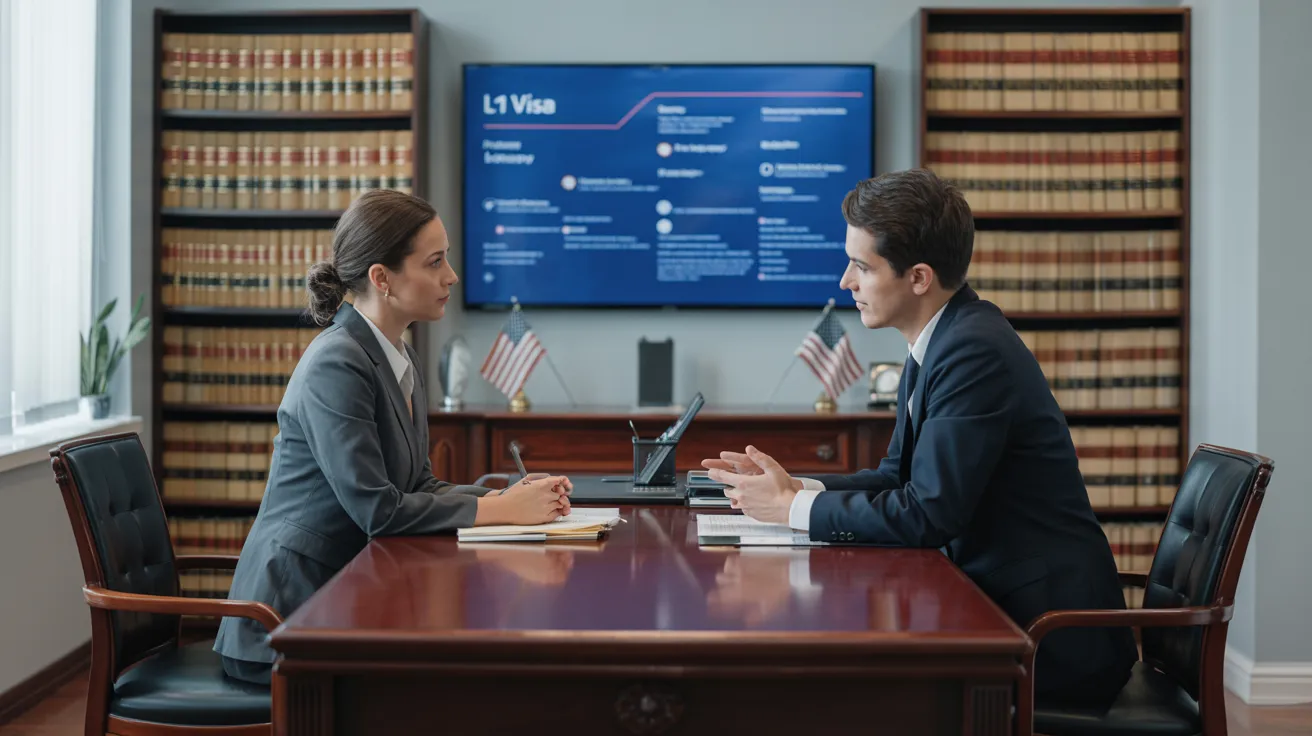
To successfully browse the L1 copyright process, precise preparation is essential. Start by thoroughly recognizing the specific requirements for the L1 copyright category you are getting, whether L1A for managers and execs or L1B for workers with specialized expertise. Gather all needed documentation early while doing so, including evidence of your employment background, business framework, and the nature of business operations.Engage legal advise experienced in migration law to guide you through the ins and outs of the application. An attorney can help assure that your application is full, exact, and engaging. They can additionally help in getting ready for prospective demands for evidence (RFEs) by proactively dealing with locations that may elevate questions.Additionally, preserve clear communication with your company, that should provide crucial support for your application. Confirm that they recognize their obligations, including filing the necessary petitions and giving documents that substantiates your duty in the organization.Prepare for the copyright meeting by practicing response to usual questions regarding your professional background and the nature of your employment. Demonstrating confidence and quality can considerably influence the outcome of your application.
Often Asked Questions
Can Family Members Members Accompany L1 copyright Owners?
Yes, member of the family can accompany L1 copyright owners. Partners and single kids under 21 years of ages are qualified for L2 visas, which enable them to live and study in the USA during the L1 holder's remain.Exactly How Lengthy Can L1 copyright Owners Stay in the U.S.?
L1 copyright owners can at first stay in the united state for approximately three years. This period might be extended, permitting an optimum stay of 7 years for L1A copyright holders and 5 years for L1B copyright ownersIs the L1 copyright a Dual Intent copyright?
The L1 copyright is considered a twin intent copyright, allowing holders to pursue long-term residency while keeping their momentary non-immigrant status. This adaptability facilitates long-lasting occupation opportunities for international staff members within U.S. business.
Can L1 copyright Owners Look For a Permit?
Yes, L1 copyright owners can obtain a copyright (L1 copyright Requirements). The L1 copyright sustains double intent, allowing holders to seek long-term residency while maintaining their non-immigrant condition, facilitating a smoother transition to a permitWhat Takes place if an L1 copyright Is Rejected?
If an L1 copyright is denied, the candidate may obtain a notice laying out the reasons for rejection. They can appeal the decision, reapply, or explore alternative copyright options depending upon their circumstances and credentials.Verdict
In recap, the L1 copyright functions as a crucial tool for multinational companies seeking to move employees to the USA. Understanding the distinctions between L1A and L1B categories, along with the eligibility demands and application procedures, is vital for successful navigation of this non-immigrant category. The advantages provided, consisting of streamlined applications and pathways to long-term residency, better boost its allure. L1 copyright. Dealing with typical challenges properly can result in a much more desirable outcome in the copyright processReport this wiki page